Reviewed · RIGA TOURS
Magical sounds of the Kokle – Learn how to play it
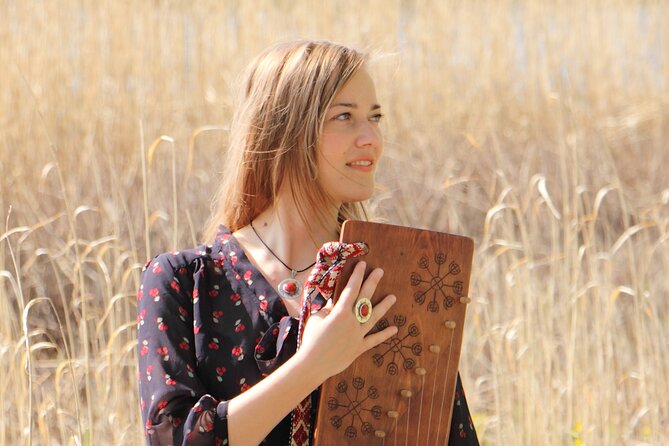
Few Riga experiences let you turn a traditional sound into something you can try with your own hands, outdoors and up close. I really like the one-on-one kokle lesson and the teacher’s private performance of Latvian folk songs. The one drawback to plan for is weather, because the workshop happens outside.
You meet at the entrance of the Ethnographic Open-Air Museum of Latvia, and the lesson is taught in English. After a short history intro, you learn the basics on the instrument and then get time to explore the grounds on your own, including a peaceful spot for a picnic by the lake.
Key highlights you should know before you go
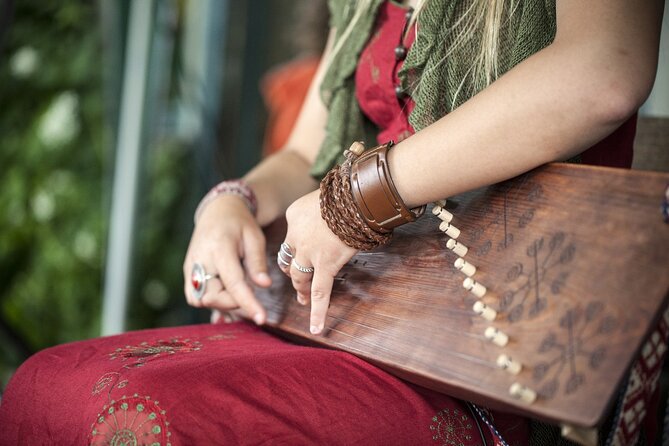
- True one-on-one instruction, designed for beginners with no previous music experience needed
- A short kokle background lesson first, covering history and different types of the instrument
- You get to play up to three Latvian folk songs, building from simple melodies onward
- A teacher-led performance of several Latvian folk songs, before your hands-on practice
- Museum time is built in, because complimentary admission to the open-air museum is included
- The instruction can be adapted, including examples of a learner playing with only one hand due to an injury
A kokle workshop that starts with meaning, not just notes
This experience is interesting because it treats the kokle as more than a one-off “instrument demo.” You start with context, you hear the songs performed, and then you get guided practice so you’re not just watching from the sidelines.
What makes it feel valuable is the pace. You’re not in a rush to “keep up.” Instead, you’re given basics and then taught a small set of songs, with room to actually learn them. That matters when you are new and your fingers are doing their own experiment.
Further Riga picks to compare
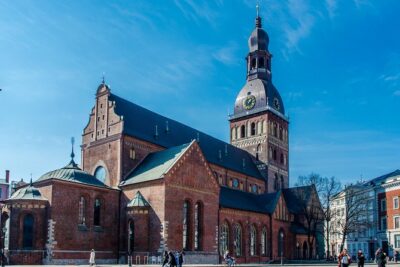
- Riga Old Town walking tour
★ 4.5 · 304 reviews - Latvian food tasting tour at Riga Central market
★ 4.5 · 241 reviews - 2 countries! Hill of Crosses, Rundale Palace and Bauska castle
★ 5.0 · 225 reviews
Where you meet: Riga’s Brīvdabas iela setting
You meet at the entrance of the Ethnographic Open-Air Museum of Latvia, at Brīvdabas iela 21, Rīga (LV-1024). The start time is 11:00 am, and the activity ends back at the meeting point.
I like this kind of meeting plan. It’s not “meet by a random street corner.” It is a single clear place, inside a museum space where the day already has a theme.
Also, since the museum is near public transportation, you can usually reach it without stress. That gives you more flexibility if you are juggling other Riga plans before noon.
The first part of the session: history, instrument types, and a short concert
The lesson begins outdoors right at the museum entrance area. The musician starts with a short background on kokle history and talks about different types of the instrument. You also learn about other Latvian folk music instruments, so you understand where the kokle sits in the broader sound world.
Then comes the part that makes people lean in. The teacher plays a few songs, and it really changes the mood from “lecture” to “music.” Even if you cannot read sheet music, this is the moment you can grasp immediately, because you are hearing how the melodies work in real time.
Before you switch into learning mode, you also get a private performance of several Latvian folk songs. It’s not a staged “touristy” concert. It feels like the teacher is showing you what you’re about to try to make yourself.
Learning the kokle: up to three simple songs, taught step-by-step
After the intro and performance, it is your turn. The musician teaches you the basics of playing the kokle and guides you through up to three simple Latvian folk songs.
This is where the one-on-one format earns its keep. With a private lesson, you are not stuck waiting for a pace that fits the fastest student. You get a real feedback loop, and you can ask questions when something is unclear.
Reading sheet notes can help, but it is not required. That detail is important for beginners. You can still participate fully, even if music notation is not your thing.
From what I would expect given the way the lessons are described, you start with simple melodies and then progress toward added structure. One participant described building from basic tunes into parts that include chords and then extra rhythms. That kind of progression is exactly how you keep things doable, while still leaving you feeling you actually learned something.
Out of the city, another idea:
- Discover Riga Bike Tour
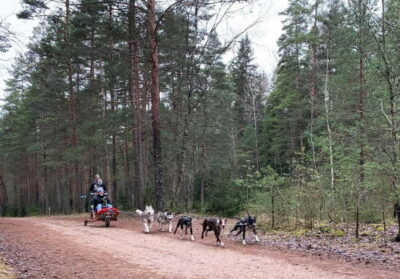
★ 5.0 · 166 reviews - From Riga: Husky Sledding or Wheel Kart Tour
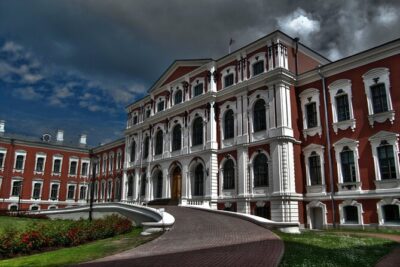
★ 4.9 · 155 reviews - From Riga: Hill of Crosses & Jelgava Highlights
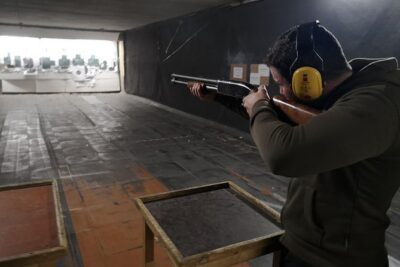
★ 5.0 · 149 reviews - Riga Gun Range: shooting with Winchester, Glock17, & Kalashnikov
★ 5.0 · 148 reviews
The “Latvian folk songs” part: a small set you can actually remember
One reason this works well is that it is a small set of songs. You are not being asked to memorize a whole program before your fingers warm up.
You can also get seasonal material. One learner was given songs tied to the Janis summer solstice celebration. If you happen to visit around a local holiday moment, you may find the repertoire chosen to match the time of year.
Either way, sticking to up to three songs is a smart teaching choice. It gives you enough repetition to feel a breakthrough, rather than collecting fragments that vanish as soon as the session ends.
What to do after: open-air museum wandering, lake picnic, and pine forest time
Once the workshop wraps, you can explore the museum on your own. Complimentary admission is included, so you can take your time without feeling like you must rush to “justify” the ticket.
This is also the best part to slow down. After an hour or so of music learning, your brain needs a reset. The museum grounds give you that outlet, and you can also choose a picnic by the lake if the weather cooperates.
You can even keep it simple and just enjoy the pine forest atmosphere. That sounds like a small thing, but it’s not. When you pair active learning with quiet outdoor time, you remember the experience longer.
A nice touch is that the session can include a small orientation walk and even herbal tea at some point in the overall museum time. It adds a warm, human feel to the day, not just lessons and leaving.
Price and value: is $226.37 per person worth it?
At $226.37 per person for about 2 hours, the price is not “budget.” But it is also not priced like a generic group attraction. The value is in the structure: you’re getting a private, one-on-one kokle lesson plus a teacher-led performance, all linked to a museum visit with complimentary admission.
Here is how I would judge it for your trip:
- If you want to learn, not just watch, this setup is unusually direct. You get to try the instrument during the same trip.
- If you are traveling with someone who enjoys music, the private format means you can both get your questions answered without splitting attention.
- If you are mainly in Riga for museums and walking, you might wonder why you are paying for a lesson. In that case, be honest about your interest in folk music and hands-on activities.
For me, the best justification is simple. You are paying for personalized coaching and a cultural experience that stays with you after you leave the museum grounds.
Timing and what the outdoor setting means for your day
The workshop starts at 11:00 am and lasts about 2 hours. Because it is outdoors, plan like it is a morning in a park. Dress for the weather, not for photos.
Bring layers. If Latvia decides to change its mind, you want the flexibility to stay comfortable. Also, wear shoes you can move in easily. You will likely spend time standing and walking a little around the museum area, then sitting or positioning yourself for practice.
If you have any physical limitations, that is something to consider thoughtfully. One learner described needing the instructor’s adaptation after an arm injury, and the lesson still worked. That suggests the teacher can adjust the approach enough for a beginner to participate, even when movement is limited.
Who this is best for, and who might skip it
This is best for you if you want a hands-on cultural moment. If you enjoy music, even casually, you will appreciate hearing the kokle played and then learning how to reproduce at least part of the sound.
You will also like it if you are the type of traveler who enjoys learning context. The short background on kokle history and different instrument types gives you something to hold onto while you listen.
This might be a less perfect fit if you are allergic to structured activities. It is not a free roaming “see things at your own pace” experience. You are there to learn, and your time is guided.
Also, since it happens outdoors, if you know you will be miserable in cool or wet conditions, consider planning the rest of your day with flexibility.
Should you book the Magical Sounds of the Kokle workshop?
Book it if you want a memorable, hands-on Latvian cultural experience that is more than sightseeing. The combination of private instruction, a short teacher performance, and museum access makes your time feel efficient and meaningful.
Skip it only if you are mostly looking for passive entertainment, or if you already have a packed schedule where a 2-hour outdoor session would feel like a hassle. Otherwise, this is the kind of activity that can turn into a story you tell later, because you left knowing how to play something on a traditional instrument.
FAQ
Is this a private tour or a group class?
It is a private tour or activity, and only your group participates.
Where do I meet the musician?
You meet at the entrance of the Ethnographic Open-Air Museum of Latvia, Brīvdabas iela 21, Rīga, LV-1024, Latvia. The activity ends back at the meeting point.
What time does the experience start, and how long does it last?
It starts at 11:00 am and lasts about 2 hours.
What language is the workshop offered in?
The workshop is offered in English.
Do I need prior experience playing music or reading sheet music?
You do not need previous music experience. Reading sheet notes can be helpful, but it is not required.
What is included besides the kokle lesson?
Complimentary admission to the Ethnographic Open-Air Museum of Latvia is included, and after the workshop you can explore the museum on your own.
What happens if the weather is poor or I need to cancel?
The experience requires good weather. If it is canceled due to poor weather, you will be offered a different date or a full refund. You can cancel for a full refund up to 24 hours before the start time.
Recently added around Riga
- Tour from Riga to Vilnius: Bauska Castle, Rundale Palace and The Hill of Crosses★ 5.0 · 3 reviews
- Rundale Palace and Bauska Castle from Riga★ 5.0 · 3 reviews
- Hang-Gliding Adventure Over Riga★ 5.0 · 4 reviews
- Private Sightseeing Tour in Sigulda★ 5.0 · 4 reviews
- Ultimate Art Nouveau Experience in Riga – Private Tour★ 5.0 · 4 reviews
- CITY QUEST RIGA: unlock the mysteries of this city!★ 4.0 · 5 reviews
- Private Castle tour from Riga:Rundale, Bauska+Hill of Crosses(LT)★ 3.5 · 3 reviews
- Old Town Sightseeing Tour in Riga by Electro Bus★ 3.5 · 3 reviews
Riga Tours, compared.
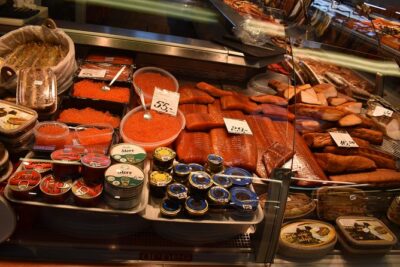
Latvian food tasting tour at Riga Central market
Read our review →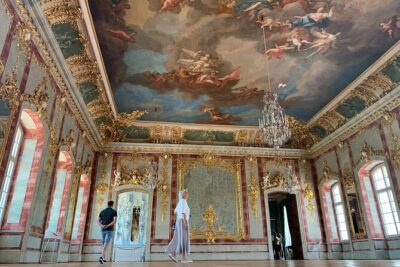
2 countries! Hill of Crosses, Rundale Palace and Bauska castle
Read our review →
Riga Gun Range: shooting with Winchester, Glock17, & Kalashnikov
Read our review →