Reviewed · PRIVATE
Private Soviet Riga tour
What makes this Riga experience so interesting is that it treats Soviet history as something you can still see and touch, not just dates in a book. I love the on-foot pace that keeps you asking questions as you go, and I love how the guide, Edvards, connects the big events to everyday life and even personal family memory. The main thing to consider is that it is a short, 2-hour walk, so you will get meaning and context, not hours inside every site.
This is a private tour for you and your group, offered in English, with free admission at each stop. You start at Latviešu strēlnieku laukums and finish at Dailes Theatre, then you are set up to keep exploring on foot around central Riga and the old town.
Key things I like about this Soviet Riga walk
- A guide who makes Soviet history feel personal, not just political
- Free stops that add up quickly if you are paying museum entry on your own
- A tight timeline from Stalin to Gorbachev, then straight to 1991
- High-impact landmarks like the KGB building, Freedom Monument, and Baltic Way footprint
- Real city logistics built around what you can actually see in 2 hours
Soviet Riga, explained where you can actually see it

Riga has old stones and grand streets, sure. But Soviet Riga is the layer that can be easy to miss if you only skim the city at surface speed. This tour is built for the opposite. You walk through a chain of places where the ideology shows up in statues, street names, architecture, and even where western visitors could sleep during the occupation.
The value here is not just that you hit famous Soviet-era sites. It is that the guide keeps connecting the dots for you. You are not left guessing why a monument matters, or why a cathedral sits in the same space as Soviet power symbols. The goal is to help you understand how control worked, how people resisted, and how Riga changed once the Soviet system collapsed.
Because it is private, you can ask direct questions. That matters with a topic like this, where different families and different neighborhoods can have very different angles on the same events. And because the total time is around 2 hours, you get a focused overview without turning your day into a history seminar.
Further Riga picks to compare
Private in practice: what you get for $180.62 per group

The price is $180.62 per group (up to 15 people), with a duration of about 2 hours. That per-group structure can work well if you are traveling with friends or family. Since it is one fixed cost for the group, you can think in simple terms: the per-person cost depends on how many of you show up.
You also avoid a common hidden expense on history tours: paid entry fees. The stops in this route are listed with free admission, which means you get more time with the guide without budgeting for ticket lines.
The tour includes a professional guide and local taxes. What is not included is hotel pick-up or drop-off, so you should plan to meet at Latviešu strēlnieku laukums and get to the finish at Dailes Theatre on your own.
This kind of setup makes the experience practical for a half-day plan. If you are already spending time in central Riga, you can add this walk without wrecking your schedule.
Starting at Latviešu strēlnieku laukums: Soviet eras, in the open air
You begin at Latviešu strēlnieku laukums, in central Riga. Right away, the guide sets up a timeline so Soviet rule is not just one long blur. You hear about different eras, from Stalin through to Gorbachev, and how the message of Soviet power shifted as leadership changed.
A big focus here is the monument tied to the Latvian red riflemen. The key idea you take away is that Soviet cultural heritage was not only imposed, it was curated into physical symbols. The guide explains why this kind of monument could carry a specific political story, and why it still matters when you look at Soviet-era public space today.
What I like about opening with this stop is that it gives you a framework before you move into heavier sites. You get context fast, then you can read what you are seeing with better eyes.
A small consideration: the tour is short, so you will not linger. If you want maximum time for photos or slow contemplation at every single monument, you might find the pace brisk.
Museum of the Occupation of Latvia: deportations to Siberia, with scale and impact
Next you reach the Museum of the Occupation of Latvia, a stop that can hit hard even if you only learn a few key points. Here the guide focuses on the deportations to Siberia, covering the reasons, the scale, and the impact on Latvian lives.
This is where the tour goes from symbols to consequences. In a topic like this, the danger is treating it as an abstract political chapter. The guide pushes you to remember that policies translated into real disruptions: families torn apart, lives changed, and trauma that lasted long after the Soviet system weakened.
Because the stop is relatively short, you should think of this as a guided orientation. You get the spine of the story, then you can decide if you want to return later for deeper reading when you have more time.
Practical tip for you: if you are sensitive to heavy topics, know that this part is the most emotionally direct. It is also one of the best reasons to take a guided tour, because the guide can keep the information clear and grounded rather than letting it feel like a random list of atrocities.
Out of the city, another idea:
- Riga Old Town walking tour
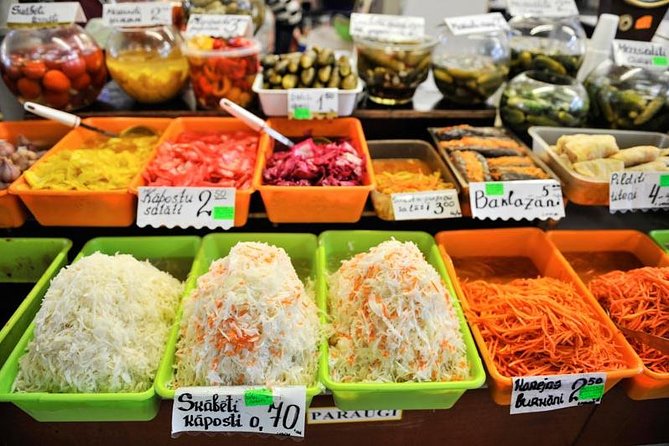
★ 4.5 · 304 reviews - Latvian food tasting tour at Riga Central market
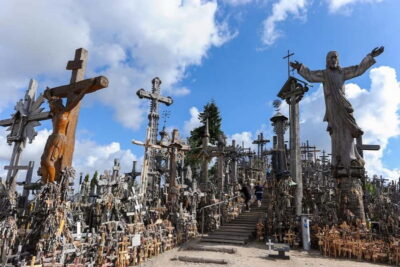
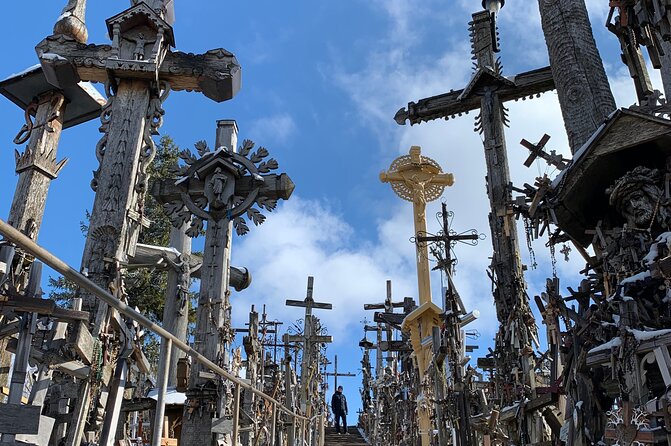
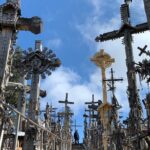
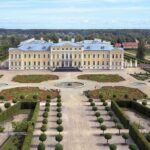
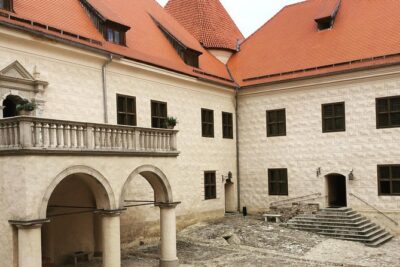
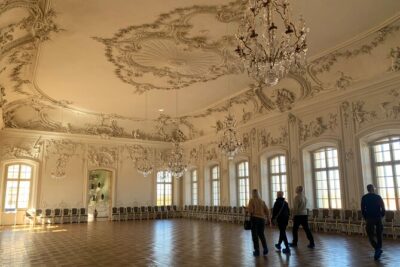
★ 4.5 · 241 reviews - 2 countries! Hill of Crosses, Rundale Palace and Bauska castle
★ 5.0 · 225 reviews - Discover Riga Bike Tour
★ 5.0 · 166 reviews
1991 Barikazu Laukums: the barricades that turned into a turning point

Then you move to 1991 Barikazu Laukums, where the story shifts to resistance. The guide explains the climax of the fight for Latvia’s independence and talks through the era of the barricades.
What makes this stop work on a walking tour is that it helps you visualize time. You stop seeing the independence movement as a single moment on a map. You see it as a messy, tense period where ordinary people faced impossible pressure, yet kept organizing and holding the line.
The guide also gives you an idea of the atmosphere: what people expected, what they feared, and why the barricades mattered beyond the physical structures. That context changes how you interpret the place when you look around. You start noticing how public space can become a stage for collective action.
Again, a short time here means you should treat it like a guided highlight rather than a full immersion. But even in that format, the story lands because it is tied to a specific location and a clear timeline.
The Baltic Way footprint: anti-Soviet protest without violence

At the Baltic Way Footprint Monument, the focus becomes surprisingly different. Instead of barricades and weapons, you learn about the Baltic Way as the largest non violent anti Soviet demonstration in the Baltics.
The guide covers logistics, mood, and impact. That is important, because non violent demonstrations can get reduced to a slogan. Here, you hear what it actually takes to coordinate people at that scale, how the mood shaped behavior, and why the event carried such weight in the broader political conversation.
What I like is that this stop balances the darker parts of Soviet rule. It reminds you that resistance was not only defensive. People also built unity and used visibility as a strategy.
Practical consideration: if you like to photograph monuments, bring your camera attention. Even with short stops, the guided explanation helps you frame your photos with meaning, not just scenery.
Freedom Monument: how Riga kept a symbol after Soviet pressure

No Soviet Riga tour feels complete without the Freedom Monument. Here you learn why it is Riga’s most iconic monument and how it survived the Soviet period.
The guide’s approach is helpful: you get significance first, then you learn the survival story. That survival is not portrayed as magic. It is explained as a mix of political shifts, symbolic power, and how people read monuments during a time when official narratives tried to dominate everything.
This is a stop that can be easy to skim if you are in tourist mode. The guide turns it into a lesson about memory. It is not only about the stone and the shape. It is about why a monument can outlast the ideology that tried to suppress it.
One thing to consider: the tour ends up walking through different religious and political spaces in a short time. So if you are easily overwhelmed by symbolism, slow down with your questions. This is a great moment to ask what you are seeing in simple terms, like how symbolism changed between occupation and independence.
Nativity of Christ Cathedral: religion under Soviet rule
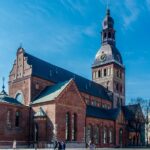
Next comes the Nativity of Christ Cathedral, where the guide talks about the Orthodox Church and how religion was treated in the Soviet period.
This stop adds a piece that many Soviet-era tours skip. Soviet power did not only control politics and labor. It also tried to manage belief systems and public religious life. The cathedral gives you a physical reference for that conversation.
The guide keeps it grounded. You learn how the Soviet approach to religion played out, and why that mattered for communities that had lived their faith through earlier eras too.
A useful takeaway for you: you stop thinking of Soviet rule as only uniforms and slogans. You start seeing it as governance that shaped culture, family life, and daily routines.
Because the stop time is about 10 minutes, you will not become an expert in church policy. Still, this is one of those places where the guided framing makes the building feel alive, not just pretty architecture.
The old Hotel Latvia and the strange logic of western access
Now you reach Radisson Blu Latvija Conference & Spa Hotel, Riga, formerly Hotel Latvia. This is one of the most intriguing stops on the route because it forces you to confront a contradiction: it was the only hotel where western tourists were allowed to stay in Soviet Riga, and the rooms were famously bugged by the KGB.
That detail does not just add spice. It changes how you think about hospitality under an authoritarian system. Access was controlled. Privacy was unreliable. Even comfort for western visitors could be turned into information gathering.
The guide uses this stop to discuss surveillance and the logic behind it. If you are the kind of traveler who likes to understand how systems work, this portion is a standout because it connects policy to something as everyday as a hotel room.
A practical note: since it is a hotel stop, you might want to look for how the building fits into the surrounding city blocks. The guide helps you read it in context, rather than treating it like an isolated anecdote.
Brīvības iela (formerly Lenin Street): architecture plus fashion as political context
Brīvības Iela, Freedom Street, is where the tour turns back toward the city’s visual everyday life. The street was formerly Lenin Street, and the guide points out examples of Soviet-era residential architecture.
This is where you learn how power shapes where people live. Housing design, street layout, and the feel of neighborhoods all carry political assumptions about community and daily routine.
The guide also connects the street to Rīgas Modes, one of the city’s most famous fashion houses. That detail is easy to miss unless someone points it out. It shows how Soviet Riga was not only about restriction. People still created culture and style within the constraints they lived under.
I like this stop because it reminds you that ideology did not erase personal taste. You get a sense of how people continued to make identity in the middle of political pressure.
The KGB building: from ideology to recruitment and interrogation
The KGB Building is next, described as the HQ of the Russian secret police in Latvia and the highest building in Riga. From the top, you can see all the way to Siberia, according to the tour description.
Even if you are not thinking about height and views, the story here is about how control operated. The guide discusses recruitment methods and interrogation methods. That is heavy material, but the guided structure helps it feel understandable rather than chaotic.
What makes this stop powerful is that it ties together earlier themes. You have already learned about symbols, deportations, and independence. Now you see the machinery. You get the sense that the system was designed to learn, label, and pressure people until resistance became harder.
The view component also adds a strange emotional effect. Siberia is far away on a map, yet the tour frames it as part of the story of deportations and fear. Standing somewhere physically high makes the idea feel more immediate, even if you cannot truly see every detail.
If you are coming into this tour with a lot of questions, this is a great moment. Ask about how recruitment worked in everyday terms, or how the system tried to break trust within communities.
Dailes Theatre and the collapse: Soviet-era architecture after the fall
Your final stop is Dailes Theatre, another anchor for understanding Soviet-era architecture. The guide wraps the story by discussing the collapse of the Soviet union.
Ending here works because theatres represent public life. Even when the Soviet system used culture for messaging, the arts also served as a space where people could keep their own interpretations alive. The guide helps you connect the building’s design and role to the larger political shift that came later.
This stop also gives you closure. You have moved through Soviet symbols and Soviet control structures, then through independence resistance, then into what Riga kept and what it changed. By the time you finish at Dailes Theatre, the story feels like it has a beginning and an end.
You finish near Dailes Theatre, and it is about a 15-minute walk to the old town. That is a nice practical touch. You can keep exploring without needing transport straight away.
Who should book, and who might want a different plan
I think you should book this private Soviet Riga tour if you want context that makes the city make sense fast. It is ideal if you are curious about the Soviet period but do not want a dry lecture. It is also great if you like the idea of a guide who can answer your questions in real time, and who brings a personal layer to the story.
You might want a different plan if your dream Riga day is slow café hopping and long museum stays. This tour is tight. It is designed for overview and guided orientation, not deep time in one single site.
For families, the tour notes that children must be accompanied by an adult, which is a good sign that it is meant to be shared. If you are traveling with older teens, this can be a strong way to connect classroom history to real places.
Should you book this private Soviet Riga tour?
If you want Soviet Riga explained in a way that feels human, book it. The best part is the guide style, with Edvards bringing clarity and personal memory to the key moments, from Soviet symbols and deportations to 1991 and the independence story. The format is also efficient: free admission at stops and a manageable 2-hour walk.
My deciding advice for you: go for it if you want to understand what you are seeing, not just see it. Skip it if you prefer a self-guided, leisurely pace with long indoor time.
FAQ
How long is the Private Soviet Riga tour?
It lasts about 2 hours.
What does the tour cost, and is it private?
The price is $180.62 per group (up to 15 people). It is private, so only your group participates.
Where does the tour start and where does it end?
It starts at Latviešu strēlnieku laukums in Centra rajons, Riga, and it ends at Dailes Theatre, Brīvības iela 75, in Centra rajons. The finish is about a 15-minute walk to the old town.
Is admission included for the stops?
Yes. The listed stops include free admission tickets.
What language is the tour offered in?
The tour is offered in English.
Is hotel pick-up or drop-off included?
No, hotel pick-up and drop-off are not included.
Are children welcome?
Children must be accompanied by an adult.
What is the cancellation policy?
You can cancel for free up to 24 hours before the experience start time for a full refund.
Recently added around Riga
- From Riga: Full-Day Scenic Gauja River Valley Kayaking Trip★ 5.0 · 7 reviews
- Admission Ticket to Live Silver Museum★ 4.5 · 7 reviews
- Old Riga Walking Tour / Riga Altstadt Spaziergang★ 5.0 · 7 reviews
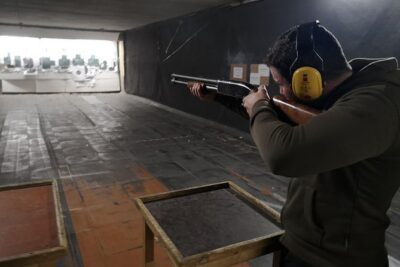
- Riga Shooting Range Trapitava★ 5.0 · 7 reviews
- Riga Black Balsam XO Tasting Exclusive Flavor in Limited Edition★ 5.0 · 7 reviews
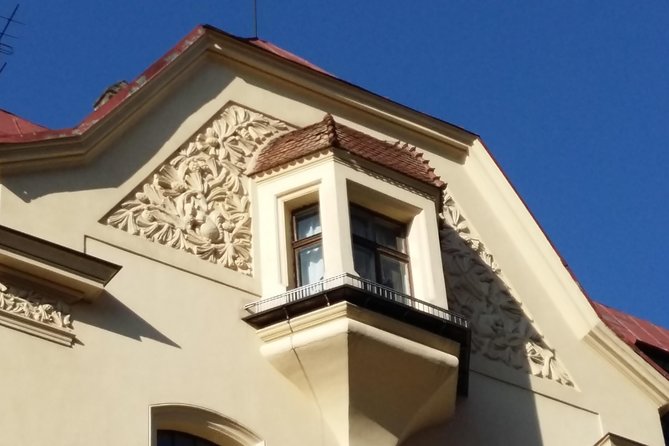
- Small Group Art Nouveau walking tour 2h★ 4.5 · 6 reviews
- Soviet Bunker, Seaside Fortress + Authentic BBQ lunch with beer★ 5.0 · 4 reviews
- Riga Art Nouveau Secrets: Self-Guided Puzzle Walk★ 5.0 · 6 reviews
Private, compared.

Private Sigulda, Turaida, and Gauja National Park Tour
Read our review →
Private Full-Day Trip to Turaida, Sigulda, and Cesis
Read our review →
Ultimate Husky dog sledding experience in Latvia – Private tour from Riga
Read our review →
Private trip – Hill of Crosses / 2 countries in 1 day
Read our review →
Full-Day Private Trip to Cesis, Sigulda and Turaida from Riga
Read our review →
Honest tour of Riga with the best private guide in town
Read our review →